Last Updated: September 20, 2026
Is pediatric chiropractic care safe for newborns? This question sits at the center of many parental decisions about early childhood wellness. At Clarendon Chiropractic, we understand that safety concerns come first, parents want evidence-based answers before considering any care for their infants. The reality is that is pediatric chiropractic care safe for newborns depends on several factors: the chiropractor’s training in pediatric techniques, the specific methods used, the newborn’s individual health status, and the presence of any contraindications. This guide explores what the evidence shows, what happens during a pediatric chiropractic visit, and how specialized pediatric care differs fundamentally from adult treatment.
Many parents report that their infants experience relief from common newborn challenges through gentle chiropractic care. Conditions like colic, feeding difficulties, sleep disturbances, and torticollis (twisted neck positioning) are among the most frequently addressed issues. The theoretical foundation rests on the idea that birth trauma, whether from vaginal delivery or cesarean section, can create subtle misalignments in the infant’s spine that interfere with nervous system function.
Gentle adjustments tailored to an infant’s delicate skeletal structure aim to restore proper alignment and reduce nerve interference. Parents often observe improvements in their infant’s comfort, sleep patterns, and feeding efficiency. Some families find that addressing these issues early prevents chronic patterns from developing later in childhood. The benefits of infant chiropractic care are most commonly reported within the first few months of life, when the infant’s body is still adjusting to life outside the womb and establishing foundational movement patterns.
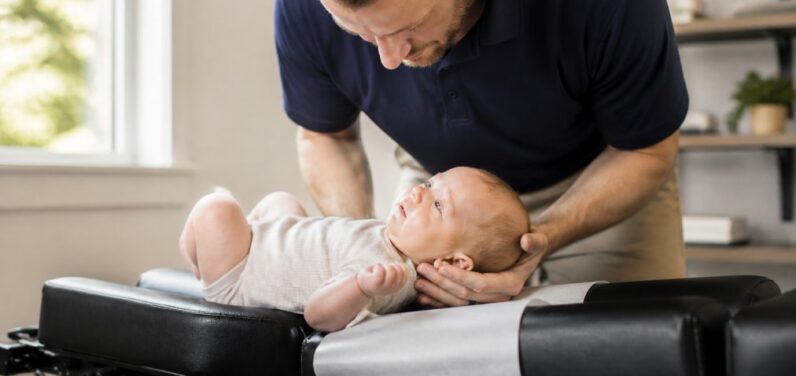
Pediatric chiropractic techniques for newborns bear almost no resemblance to the adjustments adults receive. Traditional “cracking” or high-velocity manipulation is never appropriate for infants. Instead, pediatric chiropractors employ methods designed specifically for developing spines and sensitive nervous systems.
The most common approach uses gentle finger pressure to address vertebral misalignments. A chiropractor might use their thumb or fingertip to apply sustained, light pressure to a specific vertebra, allowing the infant’s body to respond naturally without forceful manipulation. Some practitioners use specialized instruments designed for pediatric work, small, handheld tools that deliver minimal force. Others employ soft-tissue techniques, gently mobilizing muscles and connective tissue around the spine to reduce tension and improve mobility.
Cranial techniques represent another specialized approach within pediatric chiropractic care. These methods work with the bones of the skull and the membranes surrounding the brain and spinal cord. Practitioners trained in cranial work use extremely light touch, often described as feeling for subtle shifts in bone position and allowing the body’s natural rhythms to guide correction. The theory suggests that birth compression can affect cranial alignment, potentially contributing to feeding or sleep issues.
Evaluating which technique is appropriate depends entirely on the infant’s presenting complaint and the chiropractor’s assessment. A newborn with torticollis might benefit from gentle soft-tissue work combined with light vertebral mobilization, while an infant with suspected cranial compression might receive primarily cranial techniques.
Understanding the structure of a pediatric chiropractic visit helps parents feel more comfortable and informed. The appointment typically begins with a detailed health history, the chiropractor will ask about the pregnancy, delivery method, any birth complications, and the specific symptoms or concerns prompting the visit. This conversation is critical because it informs every decision about whether chiropractic care is appropriate and which techniques might help.

The physical examination follows. A trained pediatric chiropractor will assess the infant’s spinal alignment, range of motion, muscle tone, and neurological reflexes. This examination is gentle and non-invasive, the chiropractor is observing how the infant moves, feels the spine for areas of restriction, and checks for any red flags that would contraindicate chiropractic care. Many infants remain calm during this phase because the touch is so light and the environment is designed to feel safe.
If the chiropractor determines that care is appropriate, the actual treatment phase begins. For a newborn, this might last only 5 to 10 minutes. Parents remain present throughout, and the chiropractor explains each step. A first visit typically focuses on establishing baseline function and introducing the infant’s body to gentle correction. Follow-up visits build on this foundation, with the chiropractor adjusting technique and intensity based on how the infant’s body responds.
Parents should expect communication about what they’re observing at home. A pediatric chiropractor trained in functional medicine, like those at Clarendon Chiropractic, will provide guidance on positioning, feeding support, or gentle home exercises that complement the in-office care. This integrated approach recognizes that the infant’s environment, feeding mechanics, and daily positioning all influence spinal health and nervous system function.
Safety in pediatric chiropractic care hinges on several critical factors: the chiropractor’s specific training in pediatric techniques, honest assessment of contraindications, and appropriate restraint in treatment intensity. When these elements align, the risk profile is low for healthy newborns without underlying conditions.
However, certain situations absolutely contraindicate chiropractic care. Infants with bone fragility disorders, bleeding disorders, infections of the spine, or recent spinal surgery should not receive chiropractic treatment. Similarly, infants with neurological conditions like spina bifida or severe developmental delays require careful medical evaluation before any hands-on care. A responsible pediatric chiropractor will screen for these conditions during the initial consultation and refer families to medical specialists when appropriate.
The most common concern parents express is whether forceful manipulation could injure a newborn’s delicate spine. The answer is straightforward: properly trained pediatric chiropractors do not use forceful manipulation on infants. The techniques are intentionally gentle, using finger pressure and light mobilization rather than the high-velocity adjustments appropriate for adults. When technique is applied appropriately, the risk of mechanical injury is minimal.
A secondary consideration involves the risk of delayed diagnosis. If a newborn’s symptoms stem from a serious underlying condition, such as infection, malformation, or metabolic disorder, chiropractic care might delay appropriate medical intervention. This is why the initial evaluation must be thorough and why chiropractors should maintain clear referral pathways to pediatricians and specialists when red flags appear.
Pediatric chiropractors most commonly address functional issues that develop during birth or early infancy. Colic, characterized by inconsolable crying, abdominal tension, and sleep disruption, is one of the most frequent presenting complaints. The theory suggests that birth trauma or spinal tension can irritate nerves that regulate digestive function, and gentle spinal care may help resolve this. Many families report significant improvement within a few visits, though colic typically resolves on its own by 12 weeks regardless of treatment.
Torticollis, or wry neck, involves persistent tilting of the infant’s head to one side due to muscle tightness or vertebral misalignment (pubmed.ncbi.nlm.nih.gov). This condition can develop during pregnancy if the fetus is positioned awkwardly, or during delivery if excessive force is applied to the head and neck. Gentle chiropractic care combined with stretching and positioning strategies often helps resolve this within weeks.
Feeding difficulties, including poor latch, inefficient sucking, or preference for one breast, sometimes relate to spinal tension or cranial restrictions that affect the infant’s ability to position the head and mouth optimally. A chiropractor trained in lactation support can assess whether structural factors are contributing and provide targeted care.
Sleep disturbances in newborns can have many causes, but some parents observe that their infants sleep more soundly after chiropractic care, particularly if tension in the spine or cranium was restricting comfort. Plagiocephaly, flattening of the skull from prolonged pressure on one side, may benefit from cranial techniques combined with positioning changes, though severe cases require specialized helmet therapy. Gentle manual adjustments often overlap with these broader modalities, prompting a deeper examination of craniosacral therapy effectiveness as it relates to infant development and nervous system regulation.
The differences between pediatric and adult chiropractic care are profound and reflect the fundamental differences in skeletal development. An adult’s spine consists of fully ossified (hardened) vertebrae connected by stable ligaments and surrounded by developed musculature. An infant’s spine, by contrast, is largely cartilaginous, the bones are still soft and pliable, the ligaments are more elastic, and the muscles are underdeveloped (pubmed.ncbi.nlm.nih.gov).
Is pediatric chiropractic care safe for newborns? The evidence suggests that when delivered by a chiropractor with specific pediatric training, using gentle, evidence-informed techniques, and with appropriate screening for contraindications, the safety profile is favorable for healthy infants without underlying conditions. The key is finding a practitioner who understands the profound differences between a developing infant’s body and an adult’s, who respects the limits of what chiropractic care can address, and who maintains strong relationships with medical providers for appropriate referrals.
Pediatric chiropractic care may help newborns with sleep disturbances, digestive issues, and musculoskeletal alignment concerns. Some parents report improved feeding, reduced colic symptoms, and better overall comfort. However, outcomes vary by individual. A qualified pediatric chiropractor can discuss which benefits may apply to your newborn’s specific situation during a consultation.
Many pediatric chiropractors begin seeing infants shortly after birth, though some recommend waiting until after the first health screening. The appropriate age depends on your newborn’s health status and any specific concerns. A pediatric chiropractor trained in newborn care can assess your infant and determine the best timing for an initial visit.
Pediatric chiropractic techniques for newborns use gentle, light-touch methods rather than forceful adjustments. Risks are minimal when performed by a trained pediatric chiropractor, but parents should discuss any health conditions, recent trauma, or medical concerns with the provider beforehand. Always ensure your chiropractor has specific training and experience with newborn care.
Pediatric chiropractic uses specialized, gentle techniques adapted for infants’ developing bodies. Rather than the forceful adjustments common in adult care, newborn care involves light pressure, soft tissue work, and careful spinal alignment. Pediatric chiropractors receive additional training in infant anatomy and developmental milestones to ensure safe, age-appropriate treatment.


