Last Updated: November 12, 2026
Quick Summary
A natural healing alternative supports the body’s own recovery capacity instead of only suppressing symptoms, and it works best alongside conventional medicine rather than replacing it. Clarendon Chiropractic in Westmont, Illinois combines chiropractic care with functional medicine to address root causes, and the fastest way to evaluate any natural healing approach is a complimentary consultation.
The U.S. alternative healthcare providers industry is estimated at $15.4 billion in 2026, according to IBISWorld’s industry estimate, and that growth has made “natural healing” one of the most searched, and most misunderstood, phrases in wellness care. A natural healing alternative is any approach that supports the body’s own recovery capacity instead of only suppressing symptoms, and it works best alongside, not instead of, conventional medicine. Clarendon Chiropractic, a Creating Wellness Center in Westmont, Illinois, combines chiropractic care with functional medicine to address root causes rather than only symptoms.
The distinction matters. The National Center for Complementary and Integrative Health separates complementary care, which is used alongside conventional treatment, from alternative care, which replaces it.
Below, we explain how chiropractic and functional medicine combine, what testing actually measures, and how to judge a provider before you book.
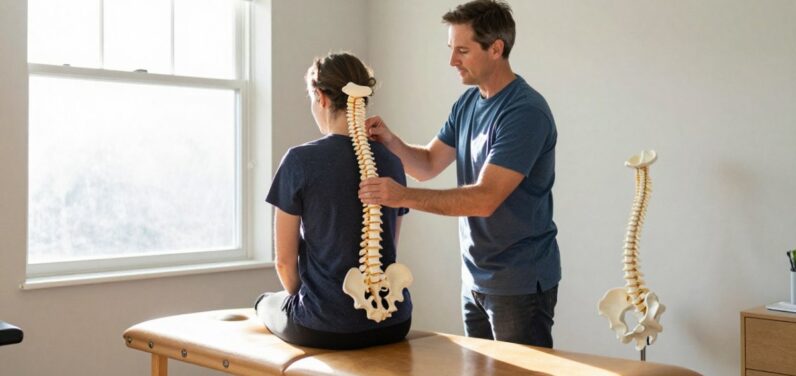
Chiropractic care focuses on spinal alignment and nervous system function. Functional medicine looks at the biochemical side: nutrition, digestion, hormones, and stress response.

If you want to see how we structure that combination, our integrative medicine services explain the combined approach in detail.
COREscore neurological testing is a diagnostic assessment used at Clarendon Chiropractic to help build personalized treatment plans.
We use the results to build personalized care plans and to track change over time. You can read more about the functional lab assessments we offer alongside it.
Chronic pain and fatigue rarely have a single cause, which is why single-treatment plans often stall. A 2022 preliminary study published in PubMed Central reported that participants believed self-healing mechanisms could be enhanced through physiological, psychological, and socio-environmental factors. That points toward multi-angle care.
General approaches to chronic pain and fatigue can include:
For readers whose main concern is exhaustion, our article on how functional medicine addresses chronic fatigue goes deeper.
Choosing a natural healing provider in Illinois involves more than reviewing a website. Consider where the provider serves, how soon you can be seen, and what happens between appointments.
Work through these checks in order:
Watch out: a provider who discourages you from seeing your primary care doctor or rheumatologist is a red flag, not a selling point. Good complementary care coordinates.
Our guide to finding a functional medicine practitioner in DuPage County walks through the questions to ask, and our integrative medicine services page explains how we structure the combined approach for patients across Westmont and the surrounding communities.
Evidence quality varies widely across natural approaches, and honest providers say so. The National Center for Complementary and Integrative Health is explicit that the amount of evidence varies by therapy and that some complementary approaches have been studied far more than others. Acupuncture, massage therapy, and spinal manipulation each carry different levels of research support and different risks, so the right question is what the evidence shows for a specific treatment and condition.
Start with credentials. In Illinois, a chiropractic physician must hold a license from the Illinois Department of Financial and Professional Regulation, and you can verify any license through the state’s online lookup. Massage therapists are licensed separately, and a functional medicine practitioner may be a physician, nurse practitioner, physician assistant, or another licensed clinician working within their scope. Ask what the practitioner is licensed to do, not just what they advertise.
A simple framework for comparing providers can help:
| Criteria | What to Ask | Why It Matters |
|---|---|---|
| Credentials | State license number, training, board certifications | Confirms scope of practice and lets you verify it |
| Evidence | What research supports this for my condition? | Separates care from marketing |
| Scope | What do you treat, and when do you refer out? | Signals honest limits |
| Cost | What is included, and what is billed separately? | Prevents surprises |
| Outcomes | How do you measure progress, and when do we reassess? | Makes results verifiable |
On evidence, a useful tiering helps you calibrate. Spinal manipulation for acute and chronic low back pain has a meaningful research base and is recommended in major clinical guidelines; the American College of Physicians lists nonpharmacologic treatments, including spinal manipulation, among first-line options for low back pain. Massage therapy has moderate support for short-term pain and relaxation. Acupuncture has been studied for some pain conditions, with mixed results depending on the condition.
Watch out: a provider who discourages you from seeing your primary care doctor or rheumatologist is a red flag, not a selling point. Good complementary care coordinates, and the National Center for Complementary and Integrative Health recommends telling all your health care providers about any complementary approach you use so care stays coordinated.
We do not publish prices because plans vary by patient. Ask for a written summary of what a plan includes before you commit, and ask which parts are typically covered by insurance and which are paid directly. Our candid piece on whether functional medicine is worth it covers the trade-offs.
The fastest way to evaluate any natural healing alternative is a conversation. Ask about credentials, testing, and what a realistic timeline looks like for your situation. Bring your medication list and recent lab work.
At Clarendon Chiropractic, Dr. Anthony Surrusco combines chiropractic care with functional medicine, COREscore neurological testing, and personalized lifestyle guidance for families across Westmont and DuPage County.
If pain, fatigue, or a chronic condition has not improved with symptom-focused care, start with a complimentary consultation. The consultation is a chance to review your history and ask questions about testing and fit.
A natural healing plan only works when it is built around your actual history, not a generic protocol. Clarendon Chiropractic combines chiropractic care, functional medicine, COREscore testing, and lifestyle guidance under one roof in Westmont. Get started with Clarendon Chiropractic and a complimentary consultation to see what root-cause care could look like for you.
A natural healing alternative refers to care approaches outside conventional medicine that support the body’s own healing processes. These include chiropractic care, functional medicine, massage therapy, and nutritional counseling. The National Center for Complementary and Integrative Health distinguishes complementary care (used alongside conventional treatment) from alternative care (used in place of it) and integrative care (combining both). Most natural healing clinics today practice complementary or integrative models, focusing on root causes rather than symptom management. Always discuss any approach with your primary care provider.
Yes. Chiropractic and functional medicine address different but connected systems. Chiropractic care focuses on spinal alignment and nervous system function, while functional medicine examines biochemical factors like nutrition, hormones, and digestion. Used together, they can address both structural and metabolic contributors to chronic pain, fatigue, and other health challenges. A clinic that combines both can create a more complete picture of your health. Ask any provider how they coordinate these approaches and whether they work with your existing physicians.
COREscore neurological testing is a diagnostic tool used in some chiropractic and wellness clinics to assess nervous system function. Practitioners who use it generally review nervous system function to inform a personalized plan. Ask the clinic to explain what specific metrics the test measures, how results inform your treatment plan, and whether the test is included in the initial consultation or billed separately.
Start by clarifying your goals: pain relief, improved energy, digestive support, or overall wellness. Then ask whether the approach has evidence for your specific condition. The National Center for Complementary and Integrative Health provides evidence-based summaries for many therapies. Consider whether you want care alongside conventional treatment or instead of it, and whether the provider coordinates with your other doctors. A complimentary consultation is a low-risk way to ask questions, review credentials, and see whether the clinic’s philosophy matches your needs before committing to a plan.


