Last Updated: October 2, 2026
When you’re dealing with posture problems, the choice in posture correction therapy vs home exercises often feels like choosing between convenience and expertise. Both approaches can improve spinal alignment, but they work differently, and which one suits you depends on your specific situation, timeline, and commitment level.
At Clarendon Chiropractic, we work with patients daily who face this exact decision. Some need hands-on professional assessment to identify the root cause of their postural dysfunction. Others benefit most from structured home routines they can maintain long-term. Many discover that a combination of both delivers the fastest, most sustainable results.
This guide breaks down posture correction therapy versus home exercises, comparing their mechanisms, timelines, effectiveness for different conditions, and how to choose the right path for your needs.
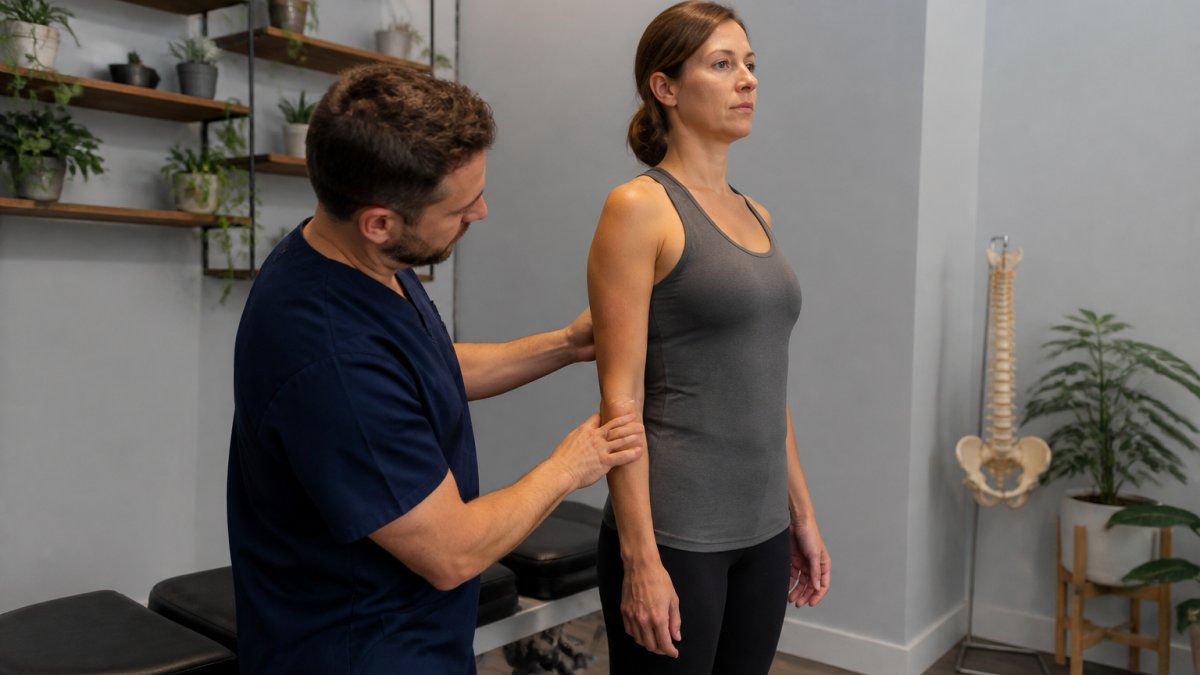
Posture correction therapy is a clinical intervention where a licensed healthcare provider, typically a chiropractor, physical therapist, or similar specialist, assesses your spinal alignment and muscular imbalances, then applies manual techniques or guided movements to restore proper positioning. The therapist works directly with your body to identify postural dysfunction and address its underlying causes.
Professional posture correction therapy typically includes:
The key advantage is professional oversight. A trained clinician can spot asymmetries and movement patterns you might miss on your own. They adjust your technique in real time, catch compensatory movements that worsen posture, and modify your program as you progress.
According to American Chiropractic Association guidelines, clinical posture assessment involves evaluating spinal curves, shoulder height, pelvic tilt, and muscle strength imbalances to create a personalized correction strategy.
Home exercises for posture involve self-directed routines you perform without professional guidance. These typically include stretches, strengthening movements, and postural awareness drills designed to lengthen tight muscles and activate weak ones.
Common home exercises include:
The advantage of home exercises is accessibility, consistency, and cost. You control your schedule, repeat movements as often as needed, and build long-term habit change without ongoing appointments.
Research from Cleveland Clinic’s posture exercise program shows that structured home routines can meaningfully improve spinal alignment when performed consistently over several weeks.
Professional evaluation uses specific clinical posture assessment tools to measure and track postural changes objectively. These tools help clinicians identify exactly where your posture deviates from optimal alignment and monitor whether treatment is working.
Common clinical posture assessment tools include:
At Clarendon Chiropractic, we use advanced diagnostic tools like COREscore neurological testing to evaluate how your nervous system is adapting to postural stress and physical imbalance. This goes beyond simple alignment measurement, it identifies whether your body’s stress response system is contributing to your posture problem.
Professional assessment reveals information home self-evaluation typically misses: muscle imbalances you can’t feel, compensatory patterns you’ve adapted to unconsciously, and whether your posture problem stems from spinal misalignment, muscle weakness, joint restriction, or nervous system dysfunction.
Timeline depends heavily on which approach you choose and how consistently you apply it.
With professional posture correction therapy:
With home exercises alone:
Back pain and poor posture are deeply connected. Forward head posture and rounded shoulders shift stress onto your lower back. Weak core muscles fail to stabilize your spine. Tight hip flexors pull your pelvis forward, increasing lower back curve.
Professional posture correction therapy for back pain:
Self-directed posture exercises for back pain:
| Approach | Best For | Timeline | Ongoing Commitment |
|---|---|---|---|
| Professional therapy | Chronic pain, severe misalignment, unclear cause | 8-12 weeks for results | Ongoing maintenance sessions recommended |
| Home exercises | Mild postural issues, prevention, habit building | 8-12 weeks for noticeable change | Daily 10-15 minute routine |
| Combined approach | Most situations, fastest results | 4-8 weeks for improvement | Professional guidance + daily home work |
Your choice depends on several factors:
Choose professional posture correction therapy if:
Choose home exercises if:
Consider combining both if:
At Clarendon Chiropractic, we typically recommend starting with professional assessment. A clinician can determine whether your posture problem requires hands-on intervention or responds well to home exercise. Many patients benefit from initial professional treatment followed by a structured home program, this combination addresses the root cause while building lasting postural habits.
Both approaches can improve posture, but they work differently. Professional posture correction therapy provides expert assessment, personalized treatment plans, and real-time feedback to correct form, making it particularly effective for chronic misalignment or pain. Home exercises offer flexibility and cost savings but require self-discipline and correct form without professional oversight. The most effective choice depends on the severity of your posture issues, your ability to stay consistent, and whether you have underlying pain or structural concerns that need clinical evaluation.
Clinical posture assessment tools include posture analysis photographs, spinal X-rays, movement screening tests, and advanced neurological assessments like COREscore testing. These tools measure spinal alignment, muscle imbalances, and nerve function to identify the root cause of posture problems. A professional assessment reveals whether your posture issues stem from muscle weakness, structural misalignment, or neurological patterns, information that guides treatment and helps you avoid ineffective exercises that don’t address your specific problem.
With professional posture correction therapy, many people notice improvements within 4 to 6 weeks of consistent treatment, though significant structural changes typically take 3 to 6 months. Home exercises alone may take longer, often 8 to 12 weeks or more, because they lack professional guidance and correction. The timeline depends on how long you’ve had poor posture, the severity of misalignment, your consistency with the program, and whether you have underlying pain or injury. Combining professional assessment with home exercises often produces faster results than either approach alone.
Home exercises can improve mild to moderate posture issues if performed correctly and consistently. However, chronic postural imbalances, especially those causing pain, affecting nerve function, or resulting from long-standing misalignment, often require professional assessment to identify the root cause and ensure you’re doing the right exercises. Without professional guidance, you risk reinforcing incorrect movement patterns or missing underlying structural or neurological issues that exercises alone won’t resolve. A professional evaluation helps determine whether home exercises are sufficient or if you need additional intervention.
Effective posture correction exercises for back pain include wall angels, pelvic tilts, planks, and rows that strengthen the core and back muscles while stretching tight chest and hip flexor muscles. The most effective exercises depend on your specific posture problem, whether you have forward head posture, rounded shoulders, or lower back sway. Professional guidance ensures you’re doing exercises with correct form and intensity for your condition. Generic exercises from online videos may not address your individual imbalances, which is why a professional assessment helps you focus on what actually works for your situation.


