
Last Updated: September 19, 2026
Choosing between chiropractic care vs physical therapy for back pain comes down to what’s causing your pain. Chiropractic care focuses on spinal alignment through hands-on adjustments, while physical therapy builds strength and mobility through guided exercise. At Clarendon Chiropractic in Westmont, Illinois, the right match, or combination, changes everything for DuPage County patients.
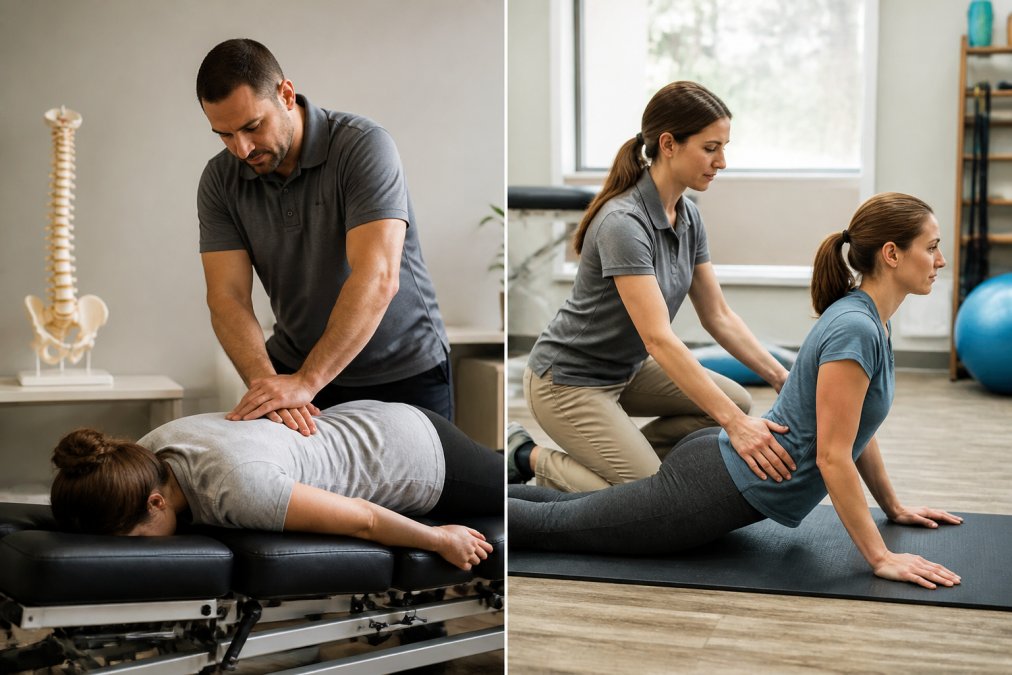
The core difference is philosophy: chiropractors adjust spinal misalignments that put pressure on nerves, while physical therapists rebuild the muscles and joints supporting your spine. The right choice depends on whether your pain stems from misalignment or from weakness and poor movement habits. (Source: National Center for Complementary and Integrative Health (NCCIH) on chiropractic care)
| Factor | Chiropractic Care | Physical Therapy |
|---|---|---|
| Primary focus | Spinal alignment, nerve function | Strength, mobility, movement |
| Typical session | Hands-on adjustment | Guided exercise, manual therapy |
| Best for | Misalignment, acute flare-ups | Weakness, post-surgical recovery |
| Home component | Minimal | Daily exercises required |
| Course length | Often shorter, maintenance visits | Several weeks of active work |
Neither is a quick fix, and many Westmont patients combine both at Clarendon Chiropractic.
Chiropractic adjustments relieve back pain by restoring spinal alignment and reducing nerve irritation, often meaning less pain and better mobility without medication or surgery. (Source: NCCIH on chiropractic care)
Adjustments alone rarely hold, so we pair them with comprehensive lifestyle guidance to address why the spine shifted out of alignment.
Most back pain treatment takes a few weeks to several months, depending on the cause, how long you’ve had it, and how consistently you follow your plan.
Acute strains may see improvement within a few weeks; chronic pain often requires several weeks to a few months of consistent care; maintenance may involve periodic visits. (Source: National Institute of Neurological Disorders and Stroke (NINDS) on back pain)
At Clarendon Chiropractic, we use COREscore neurological testing to track whether care is working instead of relying on how you feel on any given day.
Chiropractic vs physical therapy cost depends on your insurance, the number of visits, and how long your plan runs, so ask each office for a clear estimate before you commit. (Source: Medicare.gov on physical therapy coverage)
Before you choose: ask your insurance what’s covered, request a written estimate from each office, and confirm how progress will be measured.
If you’re searching for chiropractic care near me in the Westmont area, a no-pressure conversation is the right starting point.
Back pain rarely resolves on its own when the underlying cause goes unaddressed. Clarendon Chiropractic combines chiropractic care with functional medicine and COREscore neurological testing to treat the root cause, not just the symptom, with personalized care plans for long-term wellness in Westmont and DuPage County. Get started with a complimentary consultation to find out what’s actually driving your back pain.
Neither is universally better. Chiropractic care focuses on spinal alignment and nervous system function through adjustments, while physical therapy builds strength and flexibility through targeted exercises. For acute pain, chiropractic adjustments may bring faster relief. For chronic conditions or post-surgical recovery, physical therapy often plays a larger role. Many people benefit from combining both approaches under professional guidance. (Source: NCCIH on low-back pain and complementary health approaches)
Yes, many patients combine both. Chiropractic adjustments can restore joint mobility, while physical therapy strengthens supporting muscles to help maintain that alignment. The key is coordinating your care team so each provider knows what the other is doing. Ask both practitioners about timing and any precautions before starting a combined plan.
Coverage varies by plan. Many Illinois insurance plans include chiropractic benefits, though visit limits and copays differ. Medicare Part B covers manual manipulation of the spine when medically necessary. (Source: Medicare.gov on chiropractic services coverage) Check your specific plan’s provider network and coverage details before your first visit.


